Fragmented Toolchains Are Silently Billing Your Engineering Team by the Hour

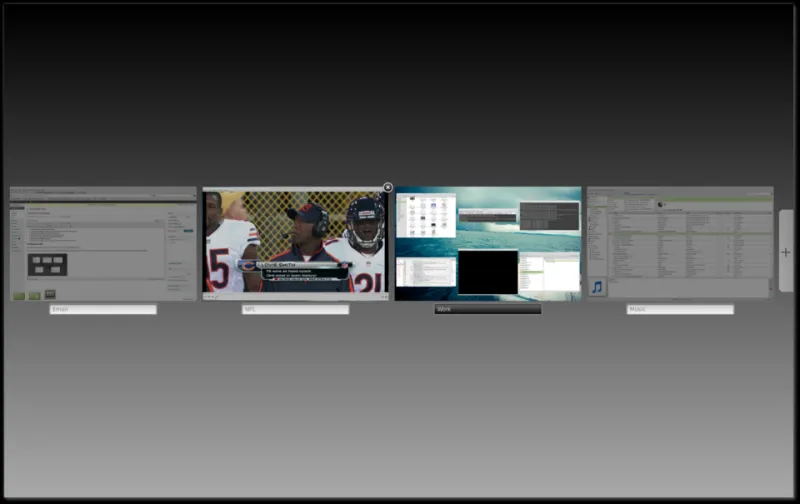
Photo: developer multiple computer screens workflow switching tools office, via thumbs.dreamstime.com
There is a line item missing from most engineering budgets. It does not appear in your SaaS subscriptions, your cloud provider invoices, or your staffing costs. Yet it drains a measurable portion of your team's productive output every single week. That line item is context switching — the cognitive and mechanical overhead of moving between tools that do not communicate with one another.
For many engineering organizations, the toolchain has grown organically over years. A ticket tracker here, a CI/CD platform there, a separate observability suite, a standalone deployment console, and a collection of IDE extensions that each speak their own language. Individually, each tool may be excellent. Collectively, they form a fragmented ecosystem that demands constant, low-grade attention from every developer on the team.
What the Research Actually Says
The cost of context switching has been studied extensively in cognitive science, and the findings are consistently sobering. A widely cited study from the University of California, Irvine found that it takes an average of 23 minutes for a knowledge worker to fully regain focus after an interruption. For software engineers — whose work demands sustained, deep concentration — that figure is particularly consequential.
More targeted research from the software industry reinforces this. A 2022 survey conducted by the DevEx Research group found that developers in organizations with highly fragmented toolchains reported spending between 20 and 30 percent of their working day on tool-related navigation: searching for context across platforms, re-authenticating into dashboards, copying data between systems, and mentally reconstructing state that a better-integrated environment would have preserved automatically.
Applied to a mid-sized engineering team of twenty developers earning an average US salary of $140,000 per year, that figure translates to roughly $560,000 in annual labor cost absorbed by tool friction alone — before accounting for the compounding effect on morale, retention, and delivery timelines.
The Invisible Switching Patterns Most Teams Never Measure
Most engineering leaders who acknowledge the context-switching problem focus on the obvious interruptions: Slack notifications, unplanned meetings, ad hoc support requests. These are real costs, but they are also relatively visible and therefore easier to address.
The more insidious switching patterns are the ones baked into the workflow itself. Consider a typical debugging session. A developer notices an anomaly in application behavior, opens the observability platform in a separate browser tab, correlates a log entry with a deployment timestamp, cross-references that timestamp in the CI/CD interface, traces the relevant pull request in the code review tool, and then opens the ticket tracker to understand the original requirement. Each of those transitions is a context switch. Each one imposes a re-orientation cost.
None of these transitions will appear in a sprint retrospective. None of them will trigger an alert. But collectively, across a team of any meaningful size, they accumulate into a structural drag on throughput that compounds over quarters and years.
Integration as an Engineering Investment, Not a Convenience Feature
The conventional response to tool fragmentation is consolidation — reducing the number of platforms in use. That approach has merit, but it is rarely sufficient on its own, and it often encounters organizational resistance. Teams have preferences, workflows have dependencies, and wholesale platform migrations carry their own significant costs.
A more surgical strategy focuses on integration rather than elimination. The goal is to reduce the number of context transitions required to complete a given workflow, without necessarily requiring teams to abandon the tools they already use.
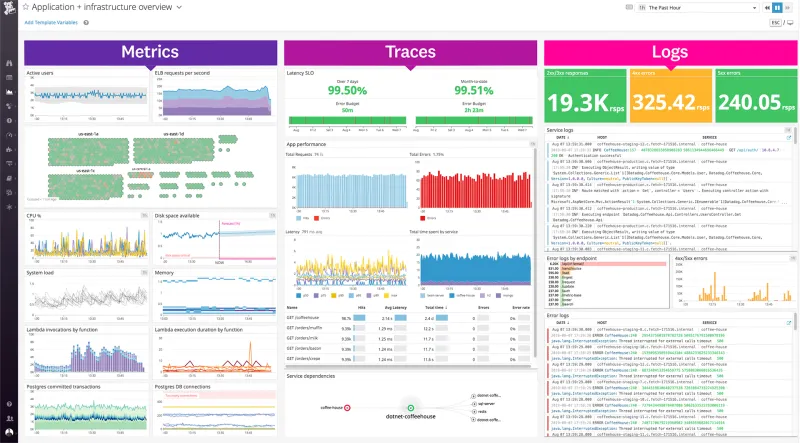
This is precisely where extension ecosystems and API-driven integrations deliver disproportionate value. Modern development platforms — GitHub, GitLab, Jira, Datadog, PagerDuty, and their peers — expose rich APIs and webhook systems that allow engineering teams to build connective tissue between otherwise isolated tools. A well-designed integration layer can surface relevant observability data directly inside a pull request interface, link deployment events to the originating ticket automatically, or push build failure context into the communication channel where the responsible developer is already working.
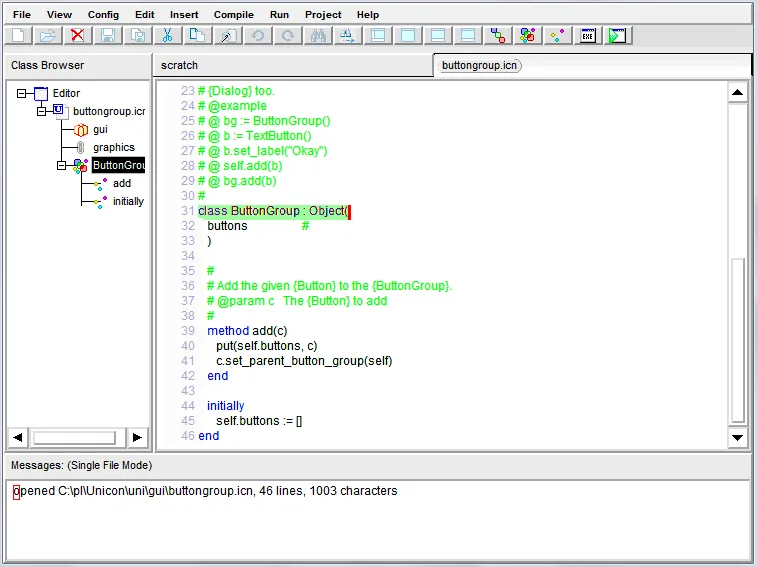
IDE extensions represent another high-leverage integration point. When a developer can view test results, check deployment status, inspect recent error traces, and reference ticket context without leaving the editor, the number of forced context transitions drops substantially. The editor becomes a unified interface rather than one node in a fragmented graph.
Building an Integration Strategy That Scales
Not all integration investments are equal. Before committing engineering time to building or purchasing integration tooling, it is worth mapping the actual switching patterns your team experiences most frequently. A simple workflow audit — asking developers to log tool transitions for a representative two-day period — often surfaces surprising concentrations of friction that were previously invisible to team leadership.
From that audit, prioritize integrations that address the highest-frequency switching patterns first. A rule of thumb worth applying: if a transition occurs more than three times per day per developer, it is a candidate for automation or integration. Below that threshold, the ROI of a custom integration may not justify the maintenance overhead.
When evaluating third-party extensions or integration platforms, scrutinize the depth of the integration rather than its surface appearance. An extension that merely links to an external tool in a new browser tab has not solved the context-switching problem — it has repackaged it. Genuine integration means that relevant context travels with the developer, surfacing in the environment where work is already happening rather than requiring a separate navigation step.
The Organizational Dimension
Tool fragmentation is not purely a technical problem. It is also a process and governance problem. In many organizations, individual teams adopt tools independently, without reference to what adjacent teams are using or how the resulting ecosystem will function as a whole. The result is a patchwork of platforms that each serve their immediate adopters well but impose coordination costs on everyone who works across team boundaries.
Establishing lightweight toolchain governance — a periodic review of the integration surface area, a shared standard for how new tools should expose their data, and a designated owner for cross-tool workflow design — can prevent fragmentation from compounding over time. This does not require a heavy-handed centralization of tool selection. It requires only that integration be treated as a first-class engineering concern rather than an afterthought.
Reclaiming the Hours
The productivity cost of context switching is real, measurable, and recoverable. It does not require a wholesale platform migration, a significant headcount increase, or a multi-year modernization program. It requires a clear-eyed assessment of where tool transitions are occurring most frequently, a disciplined investment in integration at those points, and a commitment to treating the developer's cognitive environment as infrastructure worth optimizing.
Engineering teams that make this investment consistently report faster cycle times, reduced error rates at handoff points, and — perhaps most significantly — higher developer satisfaction scores. In a market where engineering talent remains expensive and competitive, that last benefit alone may justify the effort.
The tax is real. The question is whether your organization is prepared to stop paying it.