Configuration Sprawl in Containerized Environments: A Practical Guide to Stopping Drift Before It Reaches Production
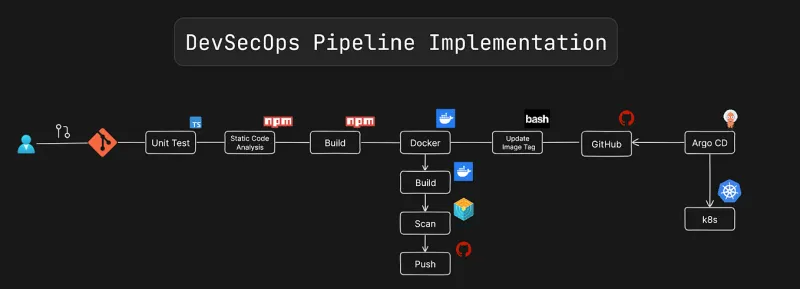
Photo: Docker container DevOps configuration infrastructure deployment pipeline, via miro.medium.com
The promise of containerization was elegantly simple: package an application with its dependencies, and it will behave identically wherever it runs. For many teams, that promise has held — at least in the beginning. The trouble arrives later, when a codebase has grown, a second team has started managing their own services, and nobody has a clear picture of whether the container configurations deployed to staging still match what is running in production.
This is container configuration drift, and it is one of the most underacknowledged sources of operational instability in modern DevOps organizations. It does not announce itself with a failed build or a broken test. It accumulates incrementally, through small deviations that seem inconsequential in isolation, until one of them triggers an incident that takes hours to diagnose because nobody thought to check the Dockerfile.
Why Containerization Does Not Automatically Prevent Drift
The conceptual appeal of containers is that they externalize the environment, making it explicit and reproducible. In practice, however, containers are only as consistent as the processes governing their configuration. And those processes, in most organizations, are informal.
Consider a typical growth trajectory. A team starts with a single Dockerfile and a straightforward Compose configuration. As the application scales, services are split out, each managed by a different engineer or subteam. Base images are updated inconsistently — some services pin to a specific digest, others use a floating tag like latest or node:18. Environment variables are added ad hoc, sometimes in the Dockerfile, sometimes in Compose overrides, sometimes injected through CI pipelines, and occasionally hardcoded into deployment manifests.
Nobody sets out to create this complexity. It emerges from the natural friction between shipping velocity and configuration governance. When a deadline is pressing, the path of least resistance is to copy a working configuration, modify the parts that are obviously relevant, and move on. The copies diverge over time, and the divergence is rarely visible until something breaks.
The Real Cost of Configuration Divergence
Drift-related incidents tend to be expensive in a specific way: they are difficult to reproduce and time-consuming to diagnose. When a service behaves differently in production than it does in staging, the standard debugging toolkit — logs, traces, metrics — often points to symptoms rather than causes. The root cause, a configuration difference that altered how a dependency was loaded or how a resource limit was applied, may not surface until an engineer manually diffs the deployment manifests.
Beyond incident response costs, configuration sprawl carries a sustained operational tax. Security patching becomes inconsistent when base images are not managed centrally — a vulnerability addressed in one service's base image may persist in three others whose configurations have drifted away from the shared standard. Compliance audits grow more complex when environment configurations cannot be reliably reconstructed from source control. Onboarding new engineers takes longer when the configuration landscape is undocumented and inconsistent.
These costs are diffuse and rarely attributed directly to configuration management failures, which is precisely why the problem persists. It does not appear on a burndown chart or a post-incident report. It shows up as friction, slowness, and a vague organizational sense that deployments are less reliable than they should be.
Detecting Drift: Frameworks and Tooling
The first step toward controlling configuration drift is making it visible. That requires both a definitional baseline — what the correct configuration looks like — and tooling capable of comparing live configurations against that baseline.
Establishing a configuration baseline begins with treating container configurations as first-class infrastructure assets. Dockerfiles, Compose files, Helm charts, and Kubernetes manifests should live in version control with the same rigor applied to application code. Base image versions should be pinned to specific digests rather than mutable tags, and those pins should be updated through a deliberate, reviewable process rather than implicitly through a latest reference.
Static analysis tooling can catch common sources of drift before configurations are committed. Tools such as Hadolint apply linting rules to Dockerfiles, flagging patterns that are known sources of inconsistency or security risk. Integrating these tools into pre-commit hooks or CI pipelines converts configuration governance from a manual review concern into an automated gate.
Drift detection in deployed environments is a distinct challenge that requires runtime comparison. In Kubernetes-based environments, tools such as Argo CD and Flux implement GitOps workflows that continuously reconcile deployed state against the desired state expressed in source control. Any deviation — whether introduced by a manual kubectl command or a deployment process that bypassed the standard pipeline — is surfaced as a drift event and can trigger automated remediation.
For teams operating Docker-based environments outside of Kubernetes, container image scanning tools integrated into CI pipelines can verify that the image digest deployed to production matches what was built and tested in the pipeline. This closes the gap between the artifact that passed testing and the artifact that is actually serving traffic.
Organizational Practices That Prevent Drift at the Source
Tooling addresses the detection side of the problem. Preventing drift from accumulating in the first place requires organizational practices that reduce the conditions under which it emerges.
Centralized base image management is one of the highest-leverage practices available. Rather than allowing each service team to independently select and maintain base images, a platform or infrastructure team maintains a curated set of organization-approved base images that are regularly updated, security-scanned, and published to an internal registry. Service teams consume these images rather than pulling directly from public registries. When a base image is updated, the change propagates consistently across all dependent services.
Configuration templating reduces the surface area for divergence by providing standardized starting points. When a new service is scaffolded using an organization-maintained template that includes a validated Dockerfile, a Compose configuration, and appropriate resource limit defaults, the likelihood of that service drifting from organizational standards during initial setup is substantially reduced.
Mandatory configuration review in deployment pipelines ensures that changes to container configurations receive the same scrutiny as application code changes. A pull request that modifies a Dockerfile or updates a Helm chart should trigger a review process that includes someone with configuration governance responsibility — not merely the engineer who made the change.
Treating Configuration as a Continuous Concern
The teams that manage container configuration most effectively are those that have stopped treating it as a one-time setup task and started treating it as a continuous operational discipline. Configuration audits belong on the same cadence as dependency audits. Drift detection belongs in the same observability infrastructure as application performance monitoring.
The irony of containerization is that its success in making environment configuration explicit has also made it easier to accumulate explicit configuration debt. Every Dockerfile is a documented artifact — and a documented artifact can drift just as surely as an undocumented one.
Closing that gap does not require a platform overhaul. It requires establishing clear ownership of configuration standards, integrating automated detection into existing pipelines, and treating configuration divergence as the operational risk it genuinely is. The infrastructure required to do this is largely available in the tools most teams are already using. The missing ingredient, in most cases, is the organizational decision to take configuration drift seriously before the next incident makes the case for them.